Skip Hire in Rotherhithe

Skip hire in Rotherhithe gives households, landlords and trade customers a straightforward way to manage bulky waste when work creates more material than a standard bin collection can handle. Our service is centred on practical skip delivery and collection for mixed projects, including clear-outs, refurbishments and routine building work. The aim is to keep waste moving in a sensible, lawful way while helping you choose the right skip for the job, the access available and the type of material you need to remove.
We offer a clear range of skip options for domestic and commercial use, with skip hire as the main service, supported by specialist choices for building work, clearance tasks and time-sensitive jobs. If you already know the scale of the waste, the next step is usually to match the container to the load type and the space on site. If you are less certain, it is still worth making an enquiry and describing the work in plain terms.
For projects where access, loading time or loading method matters, we can also discuss alternatives such as wait and load skip hire and grab hire services. Those options may suit customers who want waste removed without keeping a container on the road or driveway for longer than necessary. Choose the format that fits the site as well as the material, because that is often the clearest way to keep the job efficient.
Domestic and household skip hire options
Household waste often arrives in awkward stages rather than one neat pile, so domestic skip hire is usually about giving you enough space for the full task without over-ordering. Typical jobs include loft clearances, kitchen rip-outs, furniture disposal, garden tidy-ups and general decluttering. A suitable skip makes it easier to separate reusable items from true waste and keeps the site tidier while you work through the rooms or outdoor areas at a sensible pace.
When the job is mostly inside the home, it can help to think about how the waste will be moved from the property to the skip and whether any items need breaking down first. For example, wardrobes, shelving, timber offcuts and broken fixtures can often be reduced in size before collection. That can improve loading space and reduce wasted gaps. For mixed household loads, it is sensible to check which items are accepted before you fill the container, especially where there may be electricals, mattresses or heavier debris.
Domestic customers often use a simple process:
- identify the main waste type
- estimate the volume in broad terms
- consider access and parking
- choose a skip size that leaves some margin
Builders’ and construction waste handling

Building work creates a very different waste profile from a standard clear-out. Bricks, rubble, soil, plaster, timber, packaging and mixed renovation debris all need a container that can cope with dense material as well as lighter waste. That is why builders skip hire and construction waste disposal are often the most appropriate choices for ongoing site work. They are designed around a practical flow of waste away from the work area, rather than one-off domestic tidying.
When a project produces heavy inert waste, capacity is only part of the decision. You also need to think about how the load will be created, whether the waste is likely to contain mixed materials and how often the container will be filled. For some jobs, a regular replacement cycle matters more than a single large drop-off. For others, a smaller skip is better because it sits safely on the available ground and is easier to keep organised as the work progresses.
Construction waste clearance can be useful where the job involves repeated lifts, awkward debris or a site that needs tidying between stages. In similar circumstances, site clearance may suit works that involve removing accumulated rubbish, broken fittings or leftover materials before the next phase begins. Match the waste service to the stage of the project, because that tends to make disposal simpler and more predictable.
Clearances for homes, garages and outbuildings
Some jobs are less about one trade and more about getting a space back under control. House clearance works well where a property contains a broad mix of unwanted belongings, while garage and loft clearance suits the awkward storage areas that tend to collect items over time. These services are helpful when the waste is a mix of furniture, boxed items, broken household goods and general clutter rather than a single material stream.
Clearance work benefits from a careful first look at what is actually there. Items that are heavy, fragile, dusty or difficult to stack may require a different loading approach from loose bagged waste. If a room has narrow stairs, a low loft hatch or difficult turning space, it is worth mentioning that early so the right method can be planned. The most useful quotations are usually built from a simple description of the property, the rooms involved and the type of material waiting to be removed.
For customers who want a disposal route rather than a full site clean-up, rubbish removal can be a practical alternative where items can be lifted out directly. In some cases, that can suit smaller household jobs better than placing a skip on site. If you are deciding between several clearance formats, it helps to think about how quickly the material can be gathered and whether it is already sorted into manageable piles.
Garden, outdoor and landscaping waste
Outdoor jobs produce a different kind of volume again, especially when borders, lawns, hedges and hard landscaping are all involved at once. Garden waste removal is suited to branches, cuttings, turf, soil, pots and other outdoor debris, while larger landscaping or maintenance jobs may need a skip that can hold mixed green waste alongside bags of heavier material. The right choice depends on whether the work is light and leafy or substantial and root-heavy.
It is often useful to separate garden waste into loose green material and denser items such as paving offcuts, fencing and timber. That makes loading more efficient and helps keep the skip usable for the full job rather than filling it with the heaviest pieces first. If your project includes a mix of pruning, digging and hard landscaping, a slightly larger container may be easier than trying to manage several smaller loads. The same applies where soil or turf is being removed from a sizable border or lawn area.
For particularly bulky outdoor work, muck away services can provide a sensible route for soil and spoil, especially when the waste is more mineral and less mixed than a standard garden clear-up. If you are mainly dealing with trimmings and general outdoor clutter, the simpler approach of a garden skip may be enough. Either way, it helps to tell us whether the job includes green waste, soil or broken hard materials so the load can be assessed properly.
Commercial, office and trade waste support

Businesses often need waste removal that fits around operating hours, access controls and the practical limits of a shared site. Commercial skip hire is a strong fit for workplaces, shops, warehouses and premises that generate regular waste as part of day-to-day activity. For office moves or fit-outs, office clearance may be more suitable where furniture, paperwork, shelving and miscellaneous fittings all need to be cleared in one structured process.
Commercial work usually turns on organisation as much as capacity. The key questions are whether the waste will be collected in one batch or over several visits, whether staff need easy access to the container and whether the load includes general waste, packaging or heavier refurbishment debris. It is also worth checking internal handling routes if materials need moving through receptions, corridors or service yards. Keeping the waste stream clear from the start tends to make disposal smoother and avoids unnecessary sorting later.
Where the site is busy or the work is spread over several days, same day skip hire may be worth considering if timing is important, and site clearance can help at the end of the job when leftover waste needs removing quickly. For customers who need a broader picture of how we handle waste responsibly, waste recycling services and recycling and sustainability explain the general approach to sorting and recovery.
Choosing the right skip and understanding limits
The most effective skip hire choice is not always the biggest one. Heavy materials can fill a container by weight before they fill it by volume, while lighter mixed waste may need a larger space but not much structural strength. That is why we look at the material first, then the amount, then the access. If your job produces a combination of rubble, timber, packaging and strip-out debris, the best answer may be a balanced middle-size skip rather than the smallest or largest available option.
There are also practical limits that affect how a load should be prepared. Hazardous or specialist items often need their own route, and certain waste streams are best kept separate from general rubbish. If you are unsure about a particular item, check before loading it, especially for fridges, appliances, mattresses, plasterboard or potentially harmful materials. A little preparation can save a lot of delay. A clear list of the main contents is usually more helpful than a broad description like “mixed wasteâ€.
Where a container is not the right answer, alternative services may be a better fit. skip permits information is useful when placement on the public highway is being considered, while enclosed and lockable skip hire may suit sites that need extra control over the waste stored on premises. For heavily contaminated or restricted materials, hazardous waste disposal should be considered instead of standard skip loading.
About Rotherhithe
Rotherhithe is a district in the London Borough of Southwark, positioned on a bend of the River Thames in east London. Historically it was a riverside parish and dockland community, shaped for centuries by maritime trade, shipbuilding, wharves and the movement of goods along the water. That legacy still appears in the street pattern and in place names linked to the old river economy. The area sits close to neighbouring parts of Bermondsey, Canada Water and Surrey Quays, but it has its own identity rooted in the peninsula landscape and in the transformation of former docks into housing, public spaces and transport links. The Thames Path runs through the district, giving walkers long views across the river and access to a sequence of historic and modern waterside scenes. Among its better-known landmarks is St Mary’s Church, a structure with deep local associations and one of the most recognisable historic buildings in the area. The surroundings also include inland docks, residential developments and stretches of open water associated with the former dock system. Rotherhithe’s character combines surviving fragments of maritime London with later redevelopment, so the streets contain a blend of old cottages, converted industrial buildings and newer riverside architecture. The area’s cultural history is also visible in memorials, pubs and routes connected with migration, trade and the river workforce. As a result, it remains a place where the past of the Port of London can still be traced alongside everyday residential life.
Permits, access and working around the site
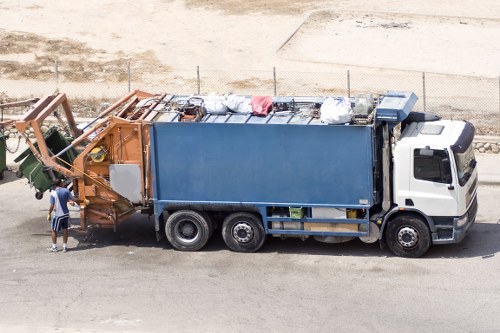
Access planning matters because even the best-sized skip can become awkward if the site layout is not thought through in advance. On tighter streets, shared courtyards or properties with limited frontage, the key questions are where the container can stand, how waste will be carried to it and whether the approach is clear enough for delivery and collection. If the job is on a road rather than private land, it is sensible to check whether a permit is needed before the container is placed. That avoids unnecessary delay and helps the job run to schedule.
For some customers, the better option is not a roadside skip at all but a method that allows waste to be removed without leaving a container in place. That can be useful where neighbours, parking or turning space are tight. In other cases, a standard skip is still the simplest answer because it allows the waste to be built up gradually over several days. The right method depends on the site, not just the material. If access is uncertain, provide a brief description of the approach, any gate widths and whether loading will happen at ground level or from within a building.
Two practical points often help keep the process smooth: first, make sure the main waste is ready when the container arrives; second, keep any items that should not go into a skip separate from the start. That saves time on the day and makes it easier to decide if a different disposal route is needed. If you want to move straight to the next step, pricing and quotes provides a place to request a quotation based on the details of your work.
Specialist disposal for larger or unusual loads
Some projects generate waste that is more specialised than general household or builders’ rubbish. Demolition jobs, strip-outs and major refits can create mixed loads with broken fixtures, heavy rubble and sharp offcuts, and these may need a different approach from routine skip hire. Demolition waste removal is useful where the waste arises from dismantling structures rather than everyday use, while muck away services can be more suitable for very heavy soil and spoil.
There are also occasions when a non-standard container or extra control is preferred because the material is hard to sort or the site has particular constraints. In those cases, it helps to think about whether the load is dusty, dense, sharp-edged, bulky or potentially restricted. These qualities can matter more than the total volume alone. Waste from a partial strip-out, for example, may be physically less bulky than furniture but still awkward because of the mix of materials and the way it stacks.
Where small appliances, sofas or similar items are the main issue, dedicated disposal pages can help you choose a better fit. Fridge and appliance removal and mattress and sofa disposal may be more appropriate than filling a general skip with items that are easier to collect separately. If you are aiming to keep the project simple, tell us what the hardest item in the load is, not just the easiest.
How to prepare your quotation

To request a quotation, give a short description of the work, the approximate amount of waste and the access conditions. If you have multiple waste types, list the main ones in order of importance. It also helps to mention whether the job is domestic, commercial or trade-based, because that affects the kind of skip or collection method likely to suit you best. The more concrete the description, the easier it is to match the service to the task without unnecessary back-and-forth.
A simple note about timing can also be helpful, especially if the skip is needed around other work on site. If you are planning a refurbishment, clearance or outdoor project, say whether the waste will be ready all at once or collected over a period of days. Where access is tight, include the practical details that matter most: parking restrictions, narrow entry points, surface type and any need to avoid blocking doors or shared routes. If you are unsure what to include, a quick summary is still better than waiting until every detail is perfect.
For a quotation or to talk through the most suitable disposal route, use plain text or visit our contact us page and send the project details there. If you already know you want to proceed, the most useful next step is to state the waste type, the area of the property involved and any access issue that could affect delivery. Send the basics first, and the rest can usually be narrowed down from there.